
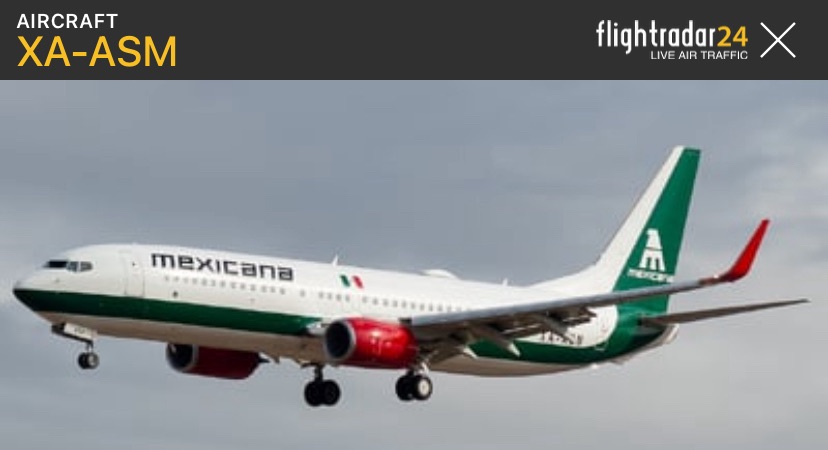

On Tuesday, December 26, 2023, I received an alert on my iPhone from Flightradar24, that a Mexicana Airlines (Mexicana de Aviacion) inaugural flight was about to land in Tulum International Airport after taking off from Felipe Angeles International Airport. Since I have never heard of Mexicana Airlines before, I was intrigued and therefore looked into the story a bit further.
Mexicana de Aviacion was initially founded in 1921 as Mexico’s first airline, but ceased operations in 2010, according to Planespotters.net. https://www.planespotters.net/airline/Mexicana
However, in a bold move, Mexico has now re-introduced its army-run airline, Mexicana Airlines, as part of President Andrés Manuel López Obrador’s strategy to expand the role of the country’s armed forces. The military-run holding company overseeing the airline now manages a diverse portfolio, including airports, hotels, trains, customs service, and tourist parks.
General Luís Cresencio Sandoval, Mexico’s defense secretary, defended the military’s involvement, stating that such diversified businesses under military control are “common in developed countries.” However, this approach is relatively rare, with only a handful of nations like Cuba, Sri Lanka, Argentina, and Colombia having military-run airlines, often operating on under-served domestic routes.
Mexicana Airlines aims to distinguish itself by offering affordable travel, with initial ticket prices approximately one-third cheaper than commercial airlines. The carrier plans to transport tourists from major Mexican cities to popular resorts like Cancun, Puerto Vallarta, Los Cabos, Zihuatanejo, Acapulco, and Mazatlan, scheduling flights every three or four days, primarily on weekends. See Mexicana’s new website here: https://mexicanavuela.com.mx/
Despite the ambitious plans, Mexicana’s inaugural flight, MXA 1788, faced challenges. Adverse weather conditions in Tulum forced the Boeing 737-800 to divert to Merida, doubling the usual travel time to Tulum. Mexicana also aspires to reach 16 small regional airports with minimal or no current flight services, potentially increasing accessibility to these areas.
The airline’s resurrection carries historical significance, reviving the Mexicana de Aviacion brand more than a decade after its collapse. Initially planning to operate a fleet of 10 Boeing 737s from Mexico City’s Felipe Angeles Airport, Mexicana Airlines faced delays, resulting in a scaled-down network of 14 destinations. The carrier’s mission is clear: reduce air travel costs and enhance connectivity, especially in northern cities, as emphasized by Miguel Vallin, the general director of Mexico’s civil aviation regulator.
As Mexicana Airlines takes flight, it aims to navigate challenges, offer affordable travel options, and contribute to Mexico’s connectivity goals while operating in a unique landscape where the military plays a pivotal role in the country’s aviation sector.




Leave a Reply