
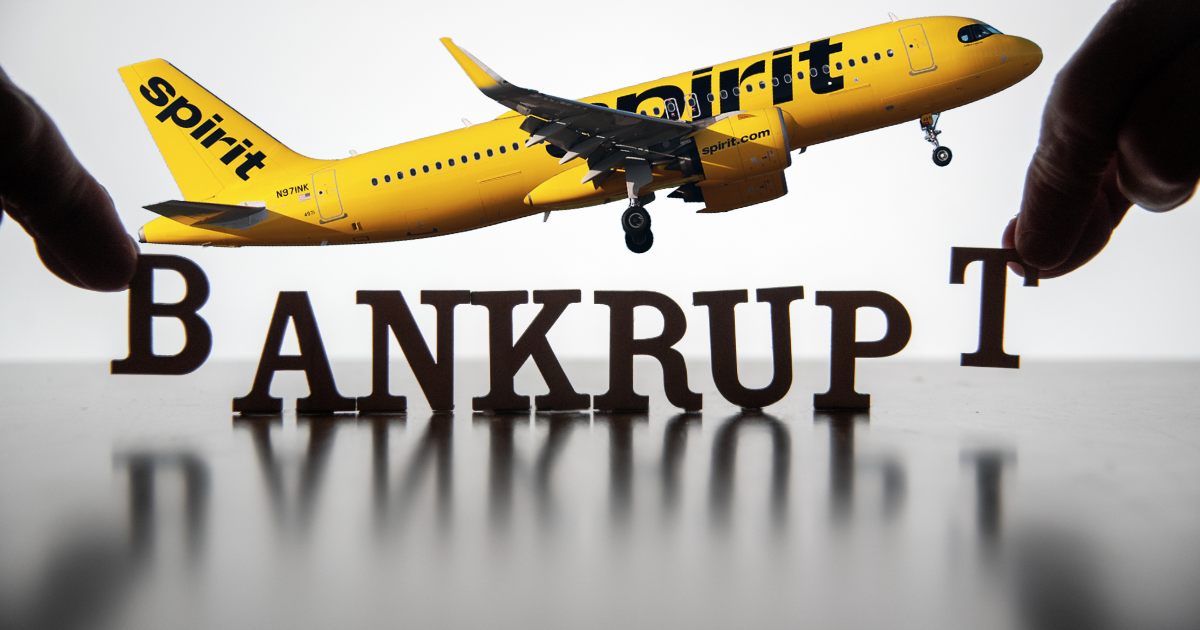

Just in time for the holidays, Spirit Airlines, the once-iconic ultra low-cost carrier that revolutionized budget travel, files for Chapter 11 bankruptcy protection. The move comes after years of financial turbulence, including a failed merger with JetBlue Airways, increasing operational costs, and mounting consumer demand for more value-added services. Here’s what this mean for travelers and the airline industry.
A Brief History of Spirit Airlines
Spirit Airlines began their journey in 1964 as a trucking company and transitioned to air travel in 1990. By 2006, under the leadership of Indigo Partners and CEO Ben Baldanza, the airline embraced an ultra-low-cost model that offered rock-bottom fares and charge extra for everything from seat assignments to carry-on bags.
Spirit’s ultra-low-cost model approach reshaped the airline industry, forcing major carriers like Delta, United, and American Airlines to introduce basic economy fares. For years, Spirit expanded rapidly, becoming a favorite for budget-conscious travelers. Their bright yellow planes and quirky marketing made them both loved and mocked, cementing their place in pop culture. However, on November 18, 2024, Spirit Airlines filed for bankruptcy, marking a significant turn in their history.
Why Spirit Filed for Bankruptcy
Spirit Airlines’ financial woes culminated in their bankruptcy filing Monday in the U.S. Bankruptcy Court for the Southern District of New York. Here’s a breakdown of the challenges Spirit faced:
- Engine Recalls: Dozens of Spirit’s jets were grounded due to engine recalls, disrupting operations and increasing costs.
- Post-Pandemic Pressures: Rising costs and intense competition in the domestic market made it difficult for Spirit to regain their footing. While international travel boomed post-pandemic, Spirit’s limited network couldn’t capitalize on this trend.
- Merger Failure: A $3.8 billion acquisition deal with JetBlue Airways was blocked earlier this year by a federal judge on antitrust grounds, leaving Spirit without a lifeline to address their mounting debts.
- Debt Crisis: Spirit faced $1.1 billion in loyalty bonds due in 2024 and struggled to renegotiate terms. The airline’s inability to secure a sustainable solution further strained their finances.
- Operational Adjustments: Despite efforts to innovate, such as introducing bundled fares and larger seats, Spirit has not reported a profit since 2019.
What Happens Next for Spirit?
Spirit’s bankruptcy filing comes with a prearranged agreement with bondholders, including $300 million in debtor-in-possession financing and plans to restructure $795 million of debt. The airline has reassured customers that operations will continue uninterrupted. You can read Spirit’s bankruptcy announcement here.
- Tickets and Loyalty Points: According to Spirit CEO Ted Christie, customers can continue to book flights, use credits, and redeem loyalty points as usual.
- Restructuring Plans: Spirit ambitiously aims to exit bankruptcy by the first quarter of 2025, focusing on reducing its debt and streamlining operations. Analysts predict further route cuts and layoffs as part of this effort.
- Future Prospects: Some experts believe that Spirit may revisit merger talks with Frontier Airlines, given the challenges of surviving as an independent carrier in an industry dominated by four major players.
Impact on Travelers
For Spirit customers, the immediate impact is minimal. Flights will operate as scheduled, and the airline has emphasized that tickets and loyalty programs remain valid. However, travelers should stay informed about potential route changes or operational adjustments as the airline progresses through bankruptcy.
A Broader Industry Shift
Spirit Airlines’ bankruptcy marks the first major U.S. airline Chapter 11 filing since American Airlines in 2011. It highlights the challenges of operating a low-cost carrier in a post-pandemic world, where consumer preferences are shifting toward more comprehensive travel experiences.
Spirit’s struggles also underscore the changing dynamics of the U.S. airline market. As travelers increasingly prioritize value over price alone, the ultra-low-cost model may need to evolve to stay relevant.
Final Thoughts
Spirit Airlines has been a trailblazer in budget air travel, but their bankruptcy filing reflects the harsh realities of today’s aviation industry. While Spirit works to regain stability, it’s a reminder form travelers to keep a close eye on airline policies and industry trends.
What do you think the future holds for Spirit Airlines? Let us know in the comments below.
You can view Spirit Airline’s November 18, 2024 bankruptcy filing here.




Leave a Reply